


MODERNIZATION OF ENTERPRISE IT ENVIRONMENTS

The road to future-proof infrastructure
The speed of technological development has now accumulated a kind of "technological debt" at many large companies. Legacy systems that used to work reliably but are now cumbersome, expensive to operate, and difficult to scale are hindering business innovation. At ULX, we not only know modern technologies, but also understand how old systems work. The goal of our service is to guide our customers through the rocky road of digital transformation while preserving existing values.
Modernization as a strategic investment
For us, modernization is not just a software update for its own sake. After a thorough audit and assessment, we make recommendations that simultaneously target reducing operating costs (TCO), increasing development speed, and eliminating vendor lock-in. We don't just make theoretical plans: we hold our customers' hands from planning through implementation to ongoing support.
Application modernization and containerization
One of the biggest disadvantages of old, monolithic applications is their environmental dependency. At ULX, we help to place these applications and software solutions into modern "packaging."
-
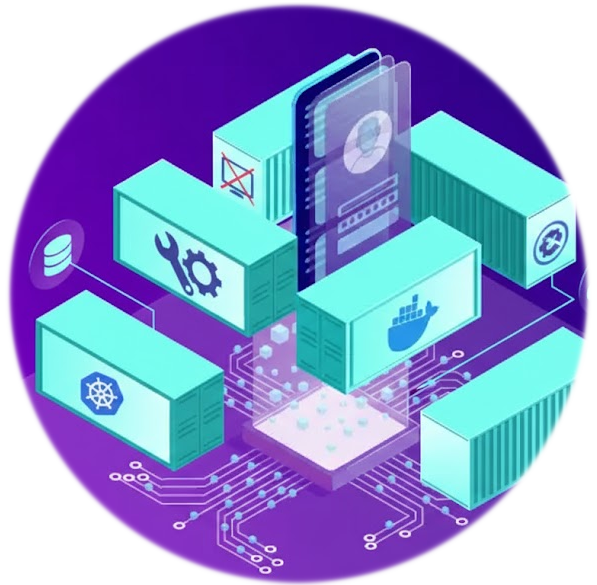
Containerization (Podman and Docker): We move your existing applications into isolated, portable containers. This eliminates a series of problems such as "it worked for the developer, but not on the live server."
-
Kubernetes and OpenShift-based execution: We place containerized applications on an intelligent container orchestration platform. This enables automatic scaling, high availability, and software updates without downtime.
-
Application decomposition: We help break down legacy, monolithic systems into smaller, more manageable microservices where it makes business sense and is feasible.
Changing virtualization platforms: Beyond VMWare
Due to market changes in recent years and the transformation of licensing models, many companies are looking for alternatives to traditional virtualization environments (e.g., VMWare).
-
KVM and OpenShift Virtualization: ULX helps migrate existing virtual machines (VMs) to a modern, container-based platform. With OpenShift Virtualization, our customers can manage their modern containers and remaining traditional virtual machines from a single interface.
-
Infrastructure consolidation: During the transition, we optimize resource utilization, often reducing the required hardware capacity and license costs to a fraction of what they were before.
Database and Data Architecture Modernization
One of the most expensive components of legacy systems is often the closed-source database (e.g., Oracle, MSSQL). At ULX, we offer a modernization alternative for the entire spectrum of data management:
-
RDBMS modernization (PostgreSQL / EDB): We help you replace costly licenses with enterprise-grade PostgreSQL solutions, ensuring data integrity and performance.
-
NoSQL and Data Cache: Where speed is critical, we offload background systems using Redis, MongoDB or Infinispan technologies.
-
Data acceleration: We modernize by incorporating cache layers that can dramatically extend the life and performance of legacy databases.
Cloud-Native Development Paradigms (Java Modernization)
Modernizing existing Java applications does not necessarily mean recoding. ULX breathes new life into code with technologies that prepare it for the cloud:
-
Quarkus integration: We migrate or supplement traditional, memory-intensive Java frameworks to Quarkus. This results in significantly faster startup times and minimal memory footprint.
-
Serverless and Knative: We introduce the concept of "scale-to-zero," whereby applications only consume resources when they actually have work to do, thereby drastically reducing cloud or data center costs.
-
API Management: We make the functions of legacy systems available through modern, secure APIs, paving the way for new digital services.
New dimensions of modernization: Automation and AI
In addition to the above elements, ULX's portfolio also includes two key areas that complete the modernization process:
Large enterprise IT automation
Modernization does not end with installation. With the Ansible Automation Platform, we automate every aspect of the modernized environment (installation, updates, troubleshooting). This ensures that the system does not become "obsolete" again and that its configuration can always be audited.
AI-based process support
We enhance modernized systems with predictive and generative AI modules that add value and functionality in a wide range of areas: they support log file analysis, error prediction, and the automation of document-based workflows, as well as the utilization and exploitation of internal information sources and knowledge bases at a much higher level and quality than before.

Our ULX modernization methodology
We carry out all our projects according to a specific risk management approach:
-
Audit and Discovery: We conduct a detailed assessment of existing software and hardware environments and identify critical dependencies.
-
Modernization strategy: We determine which systems are worth putting into containers (Rehost), which need minor modifications (Replatform), and which need to be fundamentally rethought (Refactor).
-
Proof of Concept (PoC): We demonstrate the advantages of the proposed technology on a smaller but representative subsystem.
-
Implementation and migration: We carry out the transition in planned steps, ensuring business continuity.
-
Training and support: We train the operator team to use the new technologies and provide long-term expert support (TAM).
Why choose ULX as your partner for modernization?
Modernization is a matter of trust. At ULX, we are not only heralds of the "new world," but we also understand the challenges of the "old world." With 25 years of experience behind us, we know how to transform a complex, heterogeneous IT environment in a way that does not disrupt daily business operations, while at the same time representing a real technological leap forward.